Understanding RAG: Why Your Business Needs a Custom AI Knowledge Base
Unpack Retrieval-Augmented Generation (RAG) and learn how connecting proprietary business knowledge bases and vector embeddings to AI models eliminates hallucinations and ensures pinpoint accuracy.
The Problem with Generic AI
Standard Large Language Models (LLMs) are trained on vast amounts of public internet data. While impressive at creative writing and general knowledge, they have two major flaws when applied to business operations:
- Lack of Proprietary Knowledge: They do not know your company's pricing structure, internal FAQs, compliance guidelines, or specific protocols.
- Hallucinations: When faced with unknown details, generic LLMs may invent believable but factually incorrect answers.
The solution to this challenge is RAG (Retrieval-Augmented Generation).
What is Retrieval-Augmented Generation (RAG)?
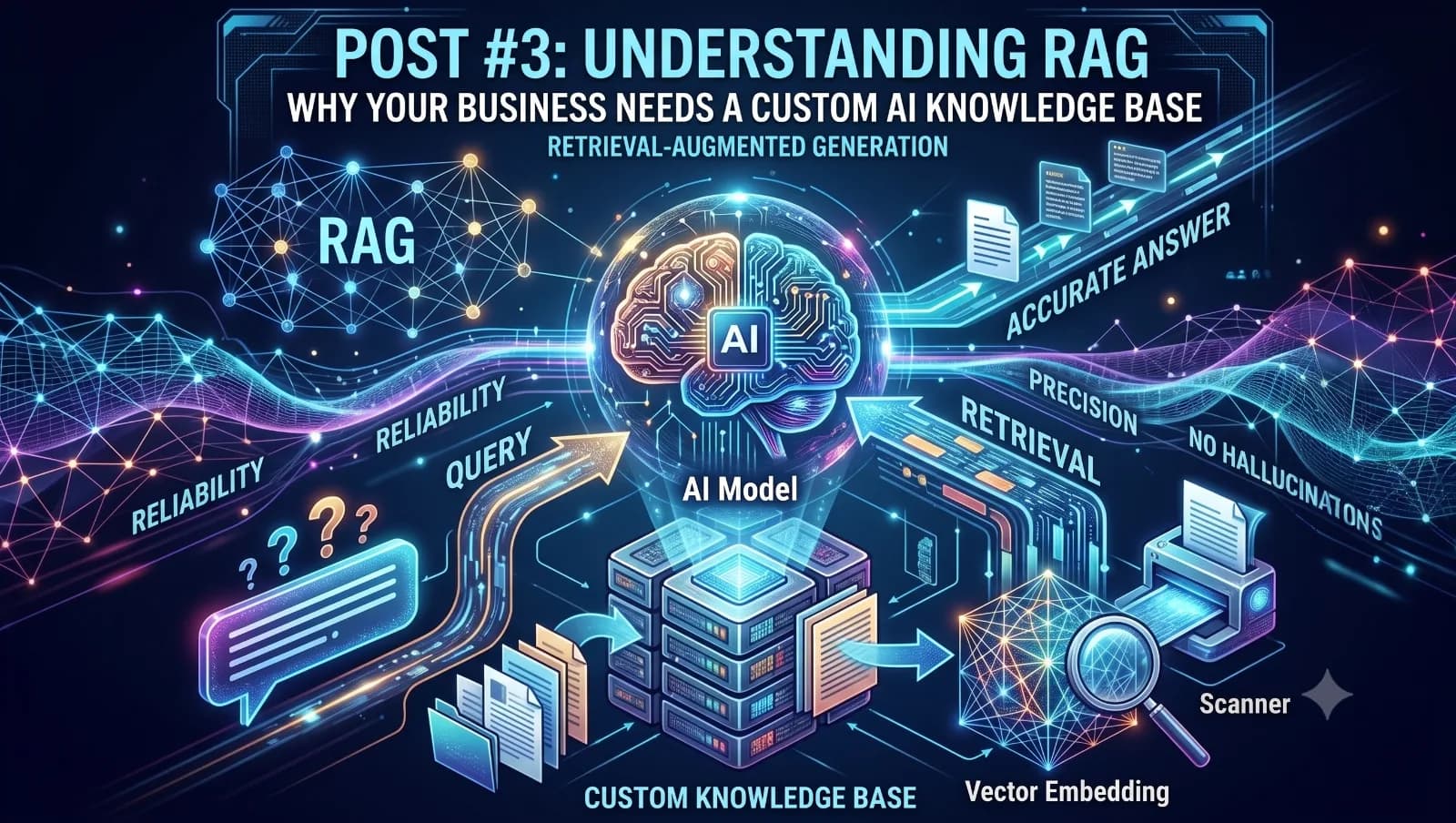
In simple terms, RAG acts as an open-book exam system for AI.
Instead of relying solely on what the AI learned during its initial training, RAG allows the AI model to consult your business's private Knowledge Base in real time before generating a response.
How the RAG Architecture Works
Wondering what this means for your business?
Start with a free 15-minute intro call. If it's worth going further, you'll get a written AI plan for your business.